

Lemon basil is one of those tender garden herbs that is just too good to let go to waste. Its light citrusy flavor is delicious in recipes, and it also makes a lovely homemade herbal tea when you want something a little bright and soothing.
Drying lemon basil leaves is an easy way to save that fresh garden flavor so you can enjoy it long after the growing season ends. Once dried, tuck the leaves away in the pantry to use for tea, seasoning blends, marinades, dressings, and your favorite recipes.
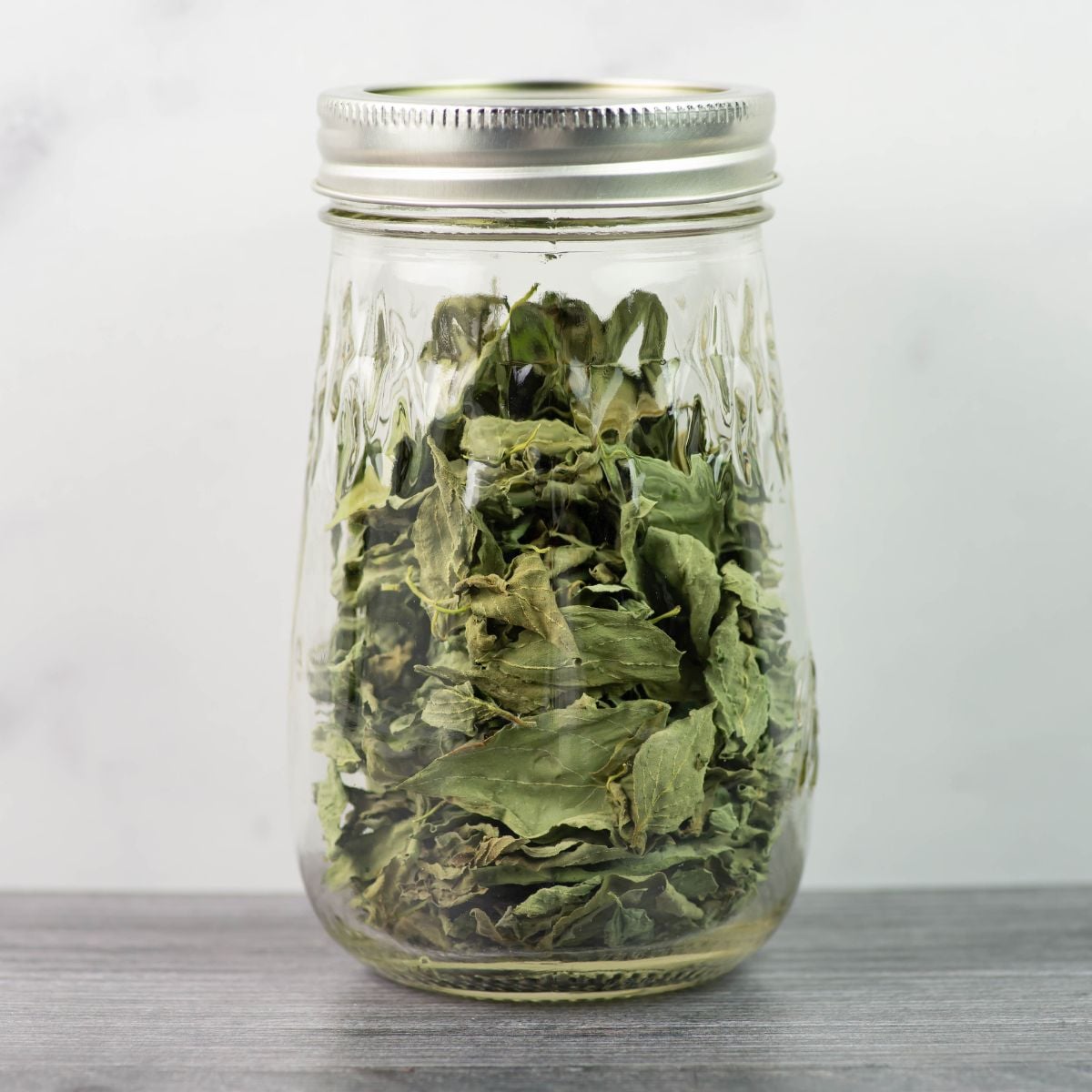
If you love the idea of brewing your own custom blends of herbal tea learning how to dehydrate lemon basil, dehydrating mint and other sweet herbs at home is your first step.
Why dehydrate herbs for tea?
Drying herbs at home for herbal teas and to use in recipes is one of the easiest ways to save money and make the most of fresh herbs before they go to waste. It also gives you a simple way to stock your pantry with homemade tea blends and dried herbs you can enjoy all year long.
- It saves money: Fresh herbs from the garden or even store-bought bundles can be dried and used later instead of buying expensive dried herbs and boxed herbal teas.
- You control what goes into your tea blends: Homemade herbal teas let you skip added flavors, fillers, or mystery ingredients and use only the herbs you want.
- You can enjoy your herbs all year long: Drying herbs at home means you can keep that summer garden flavor even when fresh herbs are out of season.
- It is easy to make custom tea blends: Once your herbs are dried, you can mix and match flavors to make your own relaxing, refreshing, or cozy tea blends.
- Its easy to make your own herb and spice blends: When you keep a few jars of dried herbs in the pantry you can make whatever you want. Dehydrated lemon basil adds a light citrusy flavor that works well in homemade seasoning blends, marinades, dressings, herbal teas, homemade sodas, lemonades and iced teas.
- You waste less: If you have extra mint, lemon balm, chamomile, or other herbs growing in the garden, drying them keeps them from going bad before you can use them.
Table of contents
- Why dehydrate herbs for tea?
- What You'll Need to Get Started
- More on Lemon Basil
- FREE Dehydrating Quick Guide
- What temperature to dry lemon basil?
- Stems or no stems?
- Prep work
- Step by Step to Dehydrating Lemon Basil
- Drying times are approximate
- High Humidity
- How to store dried herbs so they last a long time
- What can you do with dried lemon basil
- How to make herbal fire pit bundles:
- ⭐Leave a Star Rating
What You'll Need to Get Started
Before you start, gather these supplies to make the process smooth and efficient. You will of course need fresh Lemon Basil leaves and a way to dry it. I am using my 9 tray box dehydrator to dry all the herbs I grow in my container garden.
- Fresh Lemon Basil: Basil is available in many different varieties and each one has its own flavor profile. The best basil varieties for tea are the ones with a spicy-clove to citrusy and sweet flavor. Unfortunately some of the best basil varieties are not available as starters at the local garden centers where you would buy herb plants in the spring. But what you can do is start the Lemon Basil from seeds and grow them in a garden bed or a container garden which is what I do.
If you are new to herb gardening you might also enjoy reading my 12 Easy Herbs to Grow from Seeds and 10 Ways to Preserve Herbs articles.
- Harvesting and Cutting: You'll need a pair of scissors or garden snips to harvest and trim away any damaged, brown leaves and to trim the stems. A kitchen scissor will work but some of the older stems may require a pair of pruning shears. When harvesting choose firm unblemished leaves and stems. Cut the herb early in the morning before the sun reaches its peak for the best flavor.
- Cleaning herbs before drying: You will need a plastic washbasin, or a clean empty sink that holds water. I use white plastic tubs that fit in my sink to wash and rinse all my herbs. I buy them at the dollar store in bulk. They are the perfect size to wash and rinse herbs and use them weekly to wash produce.
- Drying the washed herbs: Dry the herbs as much as possible before drying them. The less water on the leaves the faster they will dry. I use a salad spinner or a stack of lint free flour sack cotton towels to gently pat as much as the water off as possible.
- A dehydrating method: Pick the drying method you like. You can start simple and tie and hang bundles to dry. And if you decide you enjoy preserving fresh herbs by drying them you can upgrade to an inexpensive food dehydrator. I use a larger box type food dehydrator with adjustable temperature settings and a timer that I feel works the best. But I started out with a smaller round one, bought a second round on and then finally upgraded to the more expensive model. I still use the round ones when I have lots of herbs to dry and my box dehydrator is full.
- Mesh tray liners: I use mesh dehydrator liners to keep the herbs from falling through the larger holes of the trays. This is a must have for any type of dehydrator your using.
- Airtight Storage Containers: Mason jars, vacuum-sealed bags, or mylar bags with oxygen absorbers for long-term storage.
👉 Optional but useful: A blender, food processor or spice grinder if you plan to turn your dehydrated herbs into powder!
More on Lemon Basil
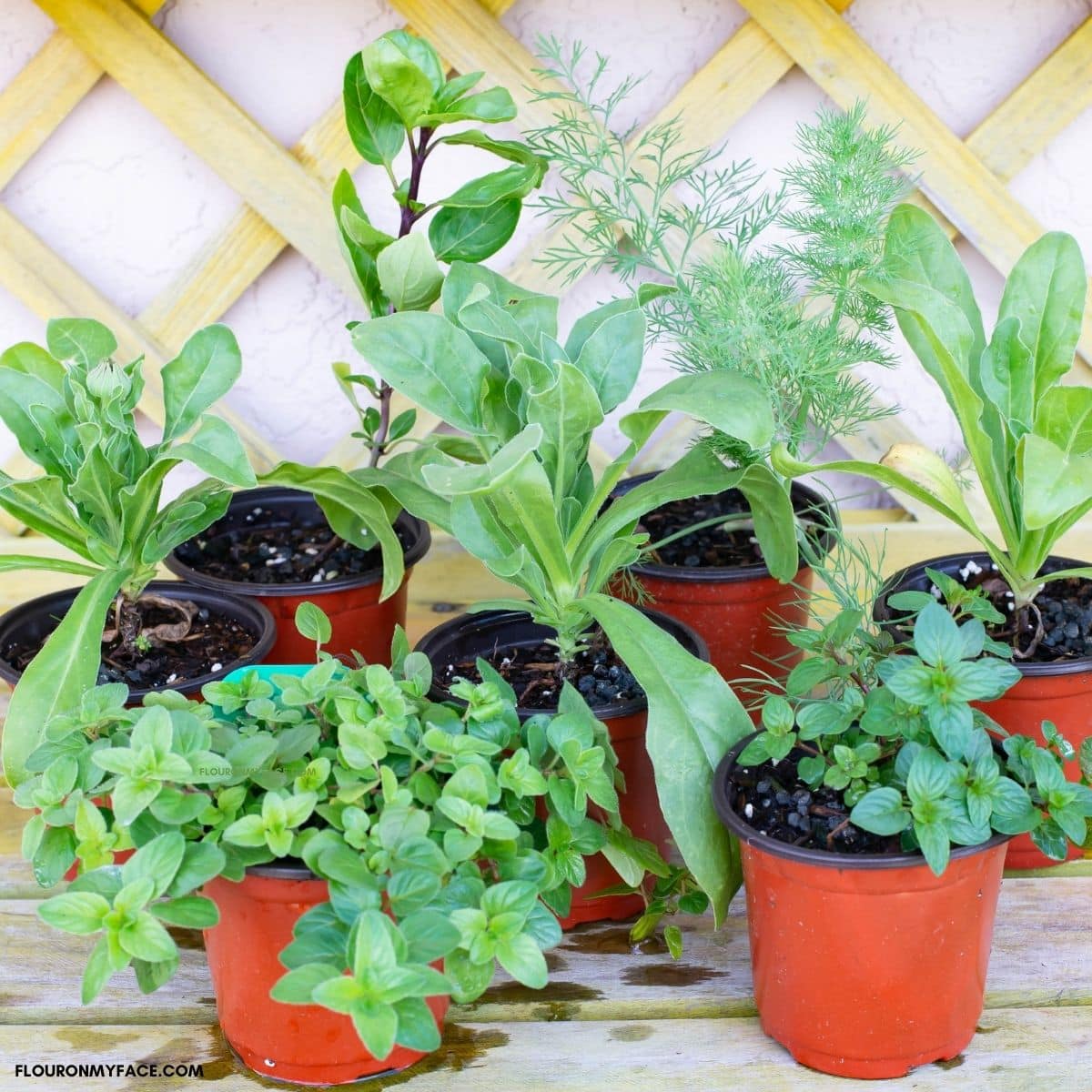
The first thing you will need is fresh Lemon Basil leaves and stems. Most likely you will not be able to buy Lemon Basil starter plants. Unless you are lucky enough to have a friend or find a seller at a local farmers market who grows it. I have to grow my own.
If you are already growing an Herbal Cocktail Garden, or growing a few pots of herbs by the kitchen door you must add a few pots of Ocimum citriodorum.
The most cost effective way is to grow herbs is to grow them yourself. For less than the cost of one 4-inch potted herb plant you can buy a packet of 100 seeds. All Basil varieties are very easy to grow in containers and self seed year after year. See my growing herbs from seeds article to get started.
FREE Dehydrating Quick Guide
Subscribe below to get my Quick Guide To Dehydrating.
👇See the step by step directions below!
What temperature to dry lemon basil?
A low temperature should be used whenever drying herbs. High temperatures will deplete the herbs of the essential oils that gives the herb its flavor and scent. I always set my dehydrator to the lowest heat setting which is 95 to 100 degrees.
Temperature is very important when dehydrating herbs. High heat will destroy the essential oils which is what gives the herb its flavor.
You should use a dehydrator that has a temperature control if possible. If you don't have one then you will need to be very careful and check on the drying herb more frequently. Once dried completely to a crunchy crispy stage turn off the dehydrator and allow to cool completely.
Stems or no stems?
Should you pluck the leaves from the stems before drying? It depends. It can take a long time to pull all those leaves off. You can sometimes get more on each drying tray if you do. I like to leave them on the stems and dry them that way. To me it is easier to strip the dried leaves from the dried stems afterwards. I then use the stems for another project I share below.
- Why I dry some of my herbs on the stems: the drying time is longer but the prep time is shorter. It is time consuming to remove the smaller lemon basil leaves from the stems. It is much faster to strip the dried leaves from the stems.
Prep work
- Harvest the fresh herb: Pick the lemon basil early in the morning before the sun gets high in the sky. I pick mine in the very yearly morning hours while dew is still present. Herbs have the highest amount of oils before the sun has dried the plant.
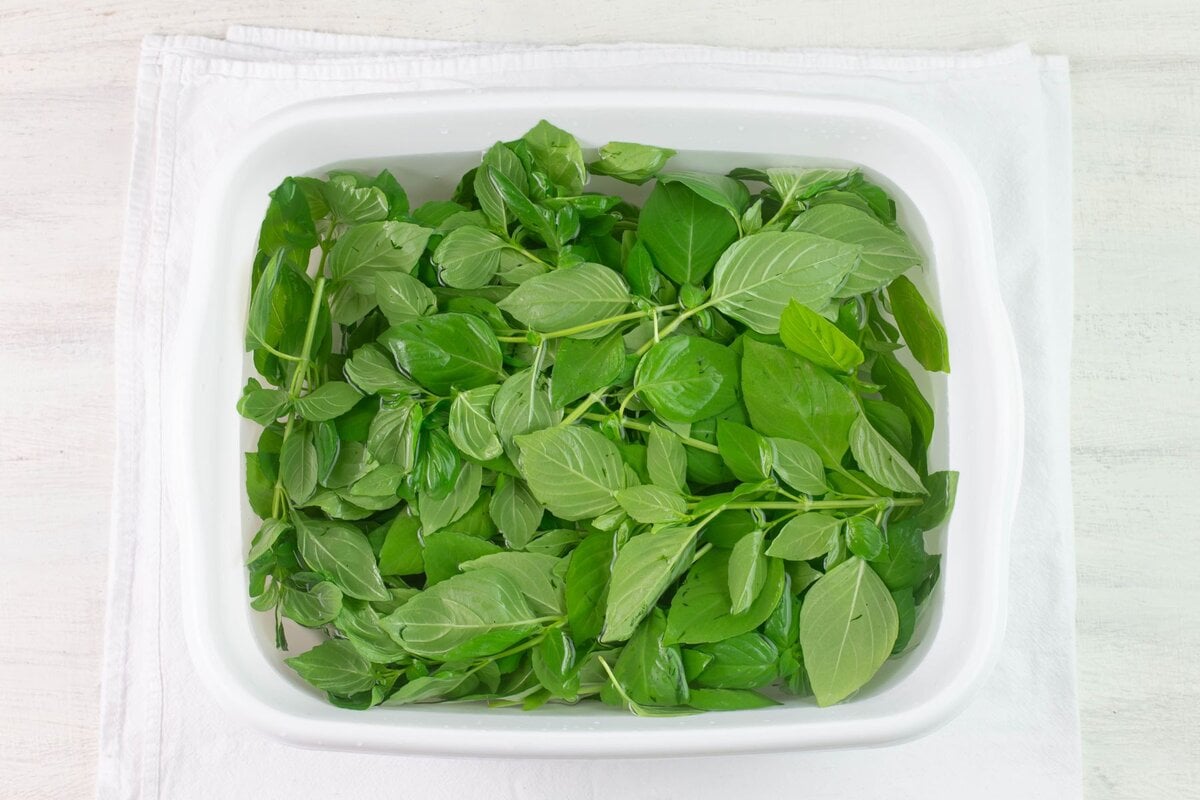
- Wash: Place your harvest in a large bowl, tub or clean sink. Rinse repeatedly with cold water as many times needed to remove all insects and debris.
- Dry: Remove as much water as possible from the leaves. The dryer the better. Gently dry the fresh herb using a soft lint free towel.
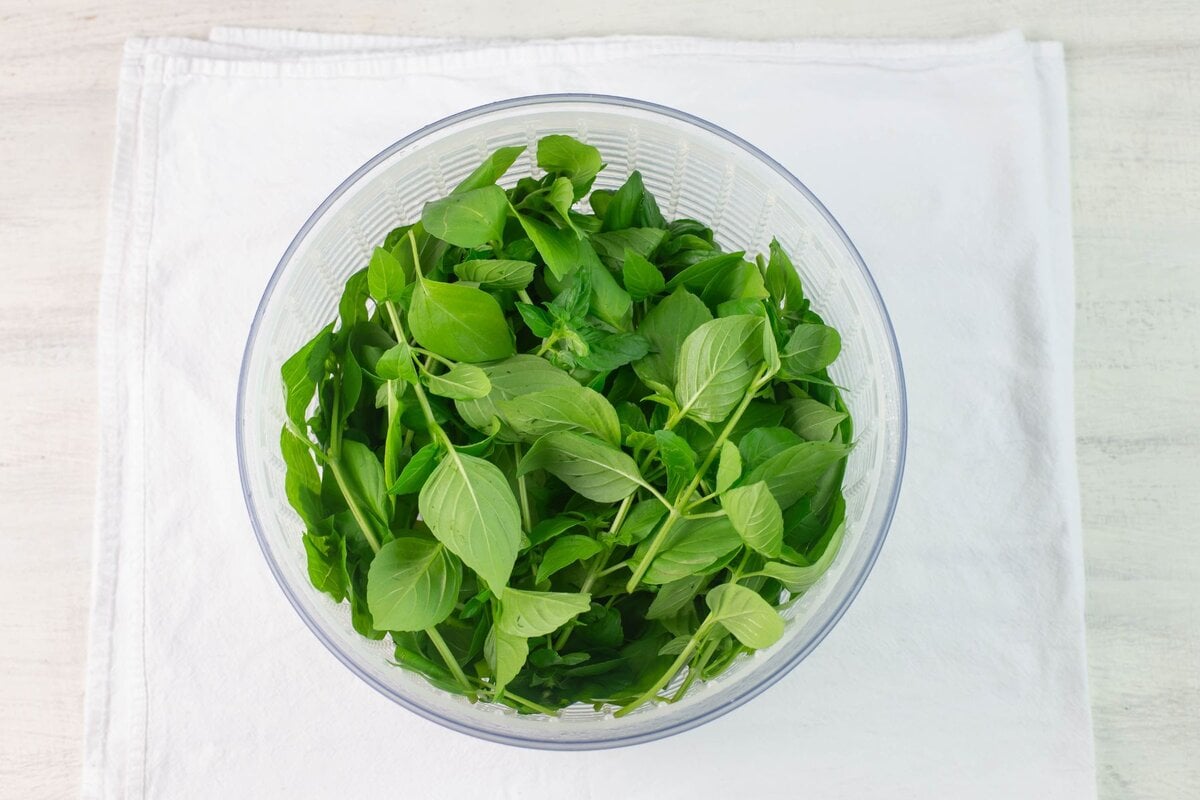
Bonus Dehydrating Tip: Or do what I do and use a salad spinner. It works like a charm.
Step by Step to Dehydrating Lemon Basil
Follow my easy step by step directions below.
- Step 1: Arrange the lemon basil stems and leaves on dehydrator trays.
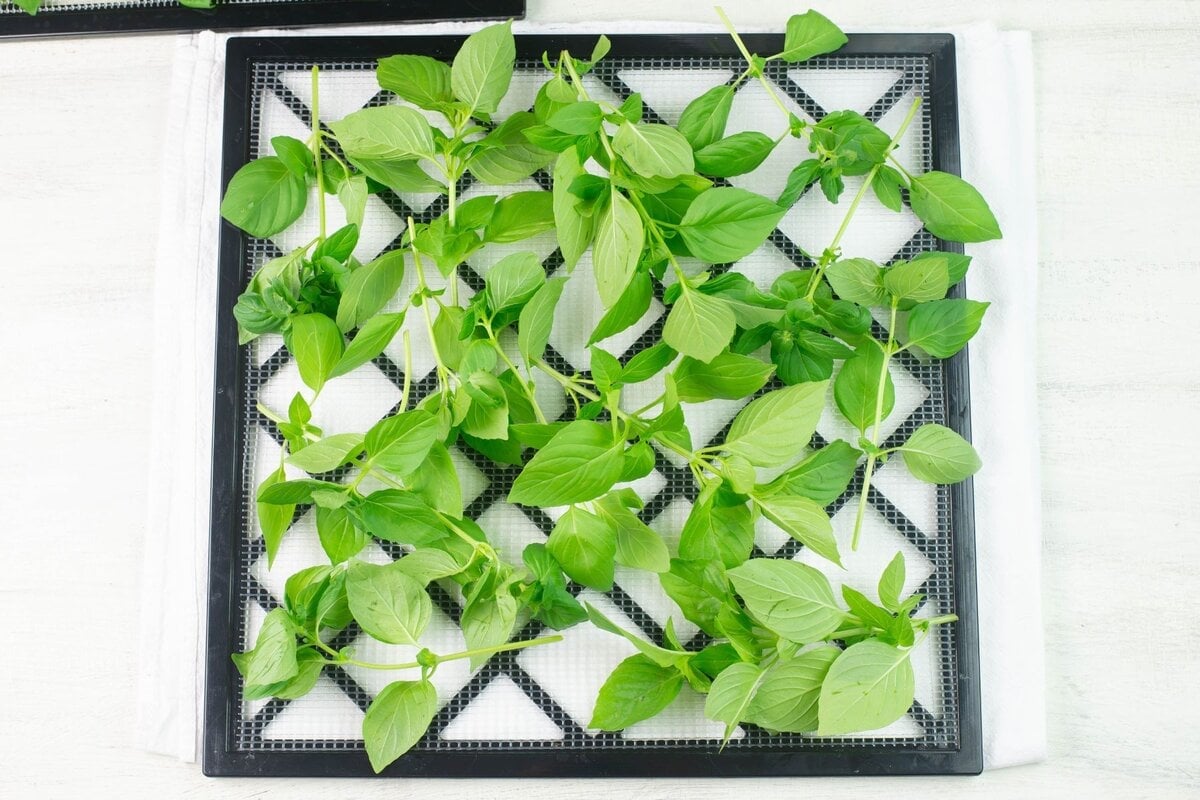
- Step 2: Use the lowest heat setting your dehydrator has. I have an Excalibur dehydrator and can set the temperature as low as 105 degrees F.
- Step 3: Load the filled trays into or onto the dehydrator. Set the temperature to the lowest setting. If your model does not have a temp control setting you should read the manual that came with it to see the temp it will run at.
- Step 4: Set a timer for 8 hours. The time it takes will depend on how thickly you have loaded the trays with fresh herbs. I like to dry my herbs on the stems. But if you decide to strip the leaves from the stems your drying time will be shorter.
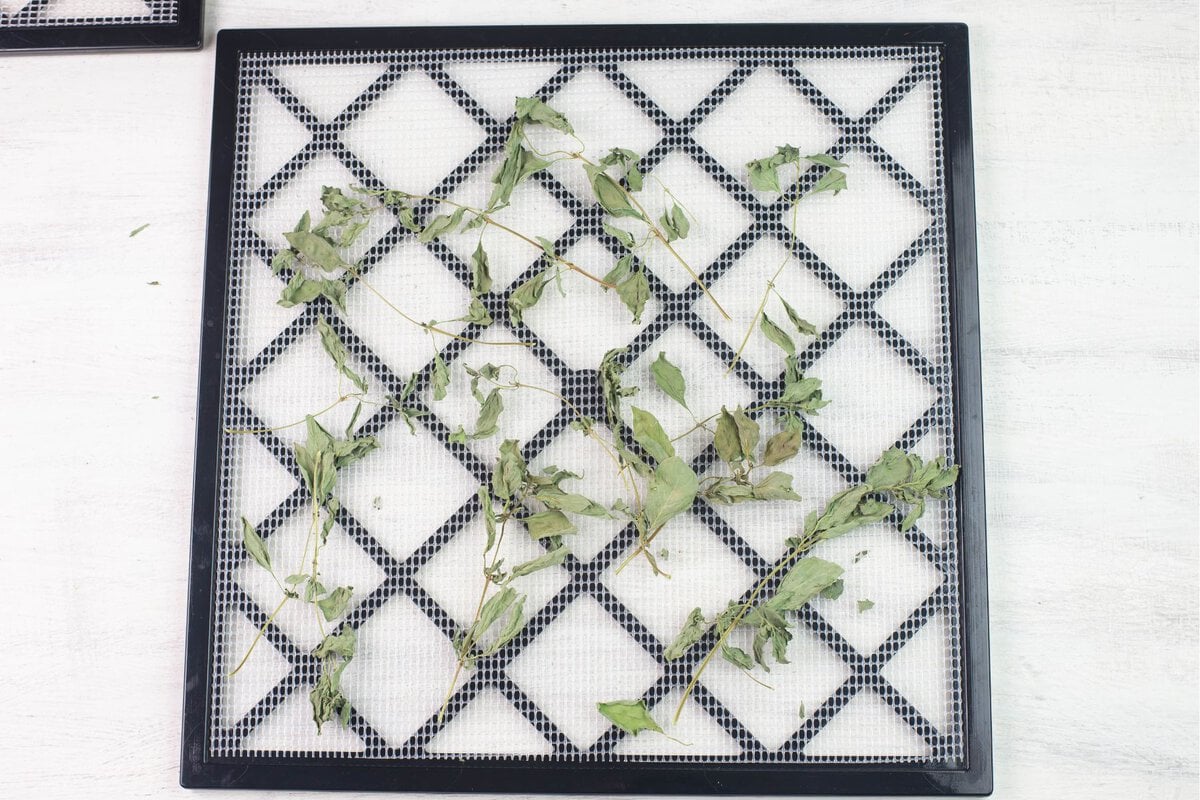
- Step 5: Check on the lemon basil every 2 to 4 hours as it is drying. For even drying you should rotate the trays every time you check how dry the herbs are.
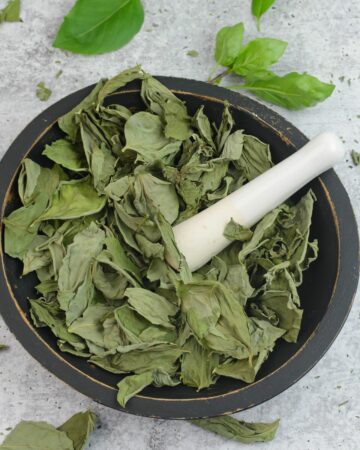
- Step 6: Once the herb is completely dry the leaves and stems should be brittle. If you squeezed a handful they it will easily crush into smaller pieces.
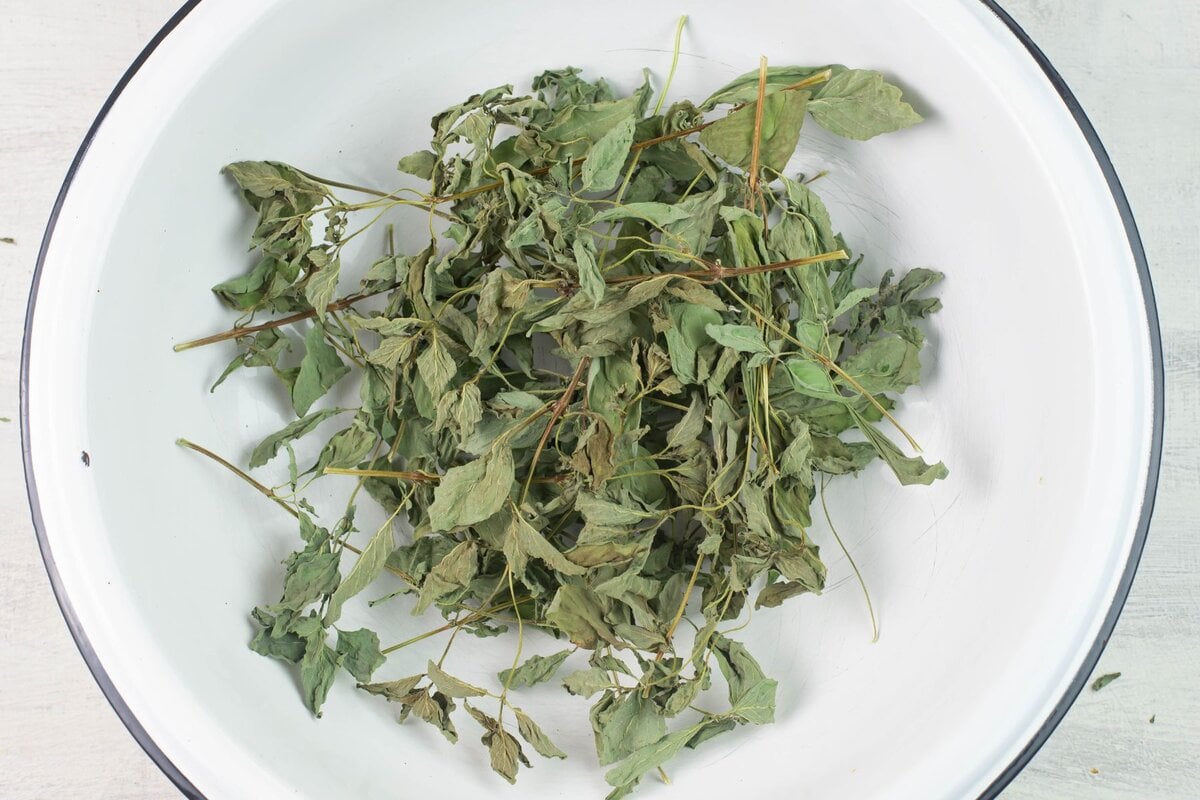
- Step 7: Strip the dried leaves from the stem by holding one end of a stem and running you closed fingers down the stem stripping the leaves from the thicker stem.
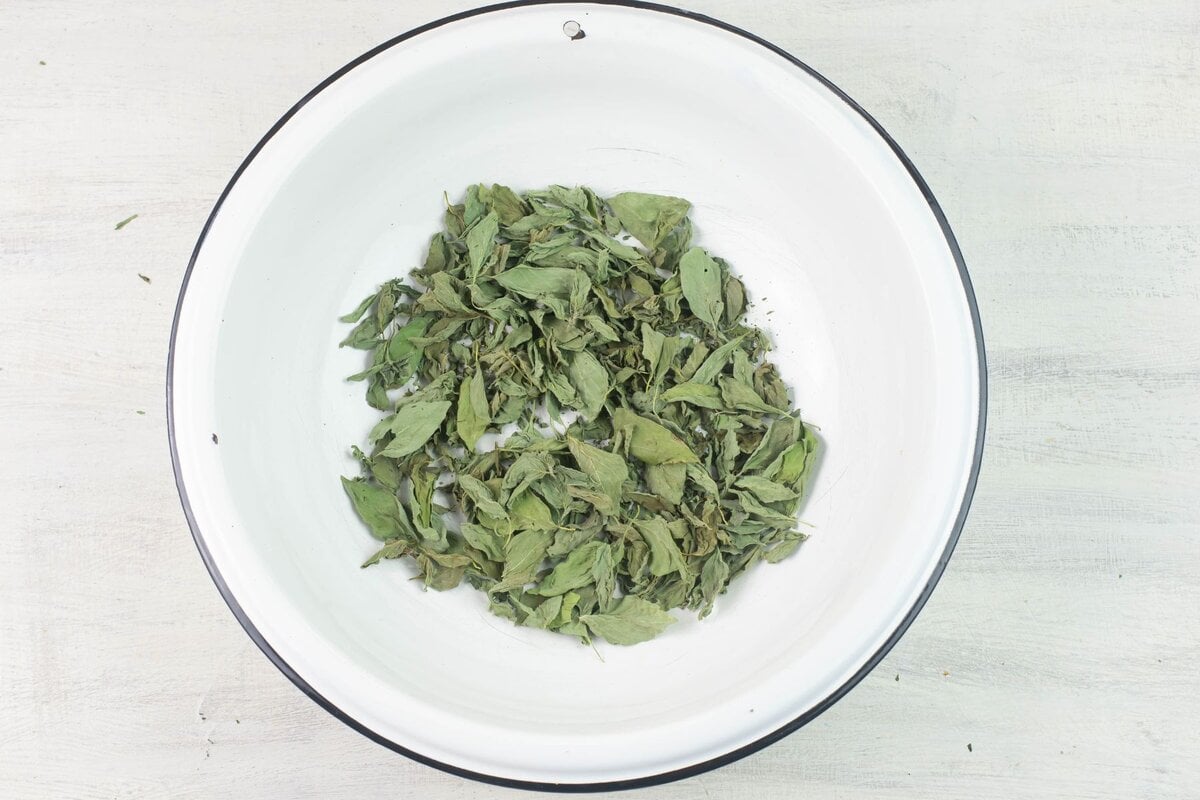
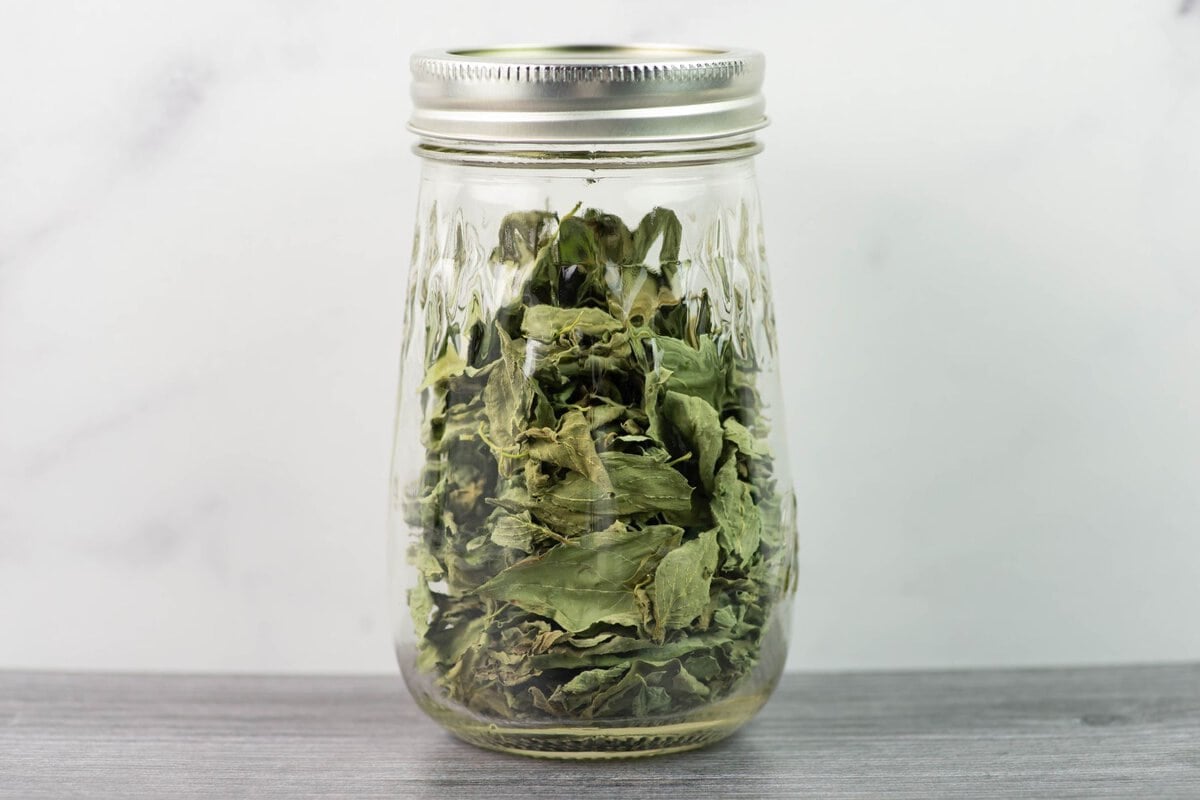
- Step 8: Transfer the dried leaves to an airtight container. Store the container in a dark cool cabinet away from heat and light.
Drying times are approximate
Drying times are approximate and will vary depending on the size of the leaves, how much moisture is in the herbs, the humidity in your home, and the dehydrator model you are using.
Lemon basil is done when the leaves are completely dry and crumble easily between your fingers.
High Humidity
High humidity: Humidity does make a difference whenever you are dehydrating. On the day I was dehydrating this batch it was raining. The high humidity caused it to take much longer than usual to dry than it normally does for me. Keep this in mind if you live where the humidity is high.
How to store dried herbs so they last a long time
Light and moisture are dried herbs enemy. You must store them well for them to last. Dried herbs can retain flavor and last for months if you take care to properly store them.
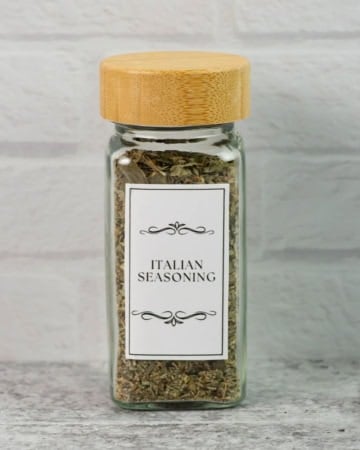
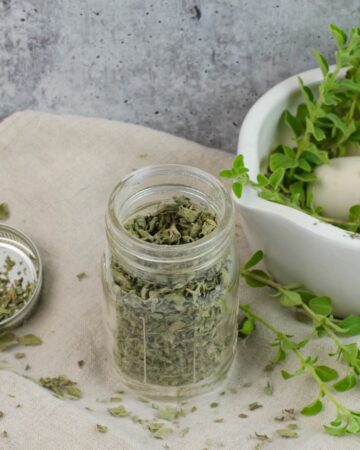
- Glass Jars are the best option: Airtight glass jars with tight fitting lids or recycled spice jars are the best way to store dried herbs.
- A dark kitchen cabinet or pantry: Keep the jars away from heat, humidity and sunlight. Store the jars in a dark kitchen spice cabinet or pantry that is not right next to appliances or the sink. Sun light will damage the herbs by fading the color and evaporating the oils and flavor making them weak.
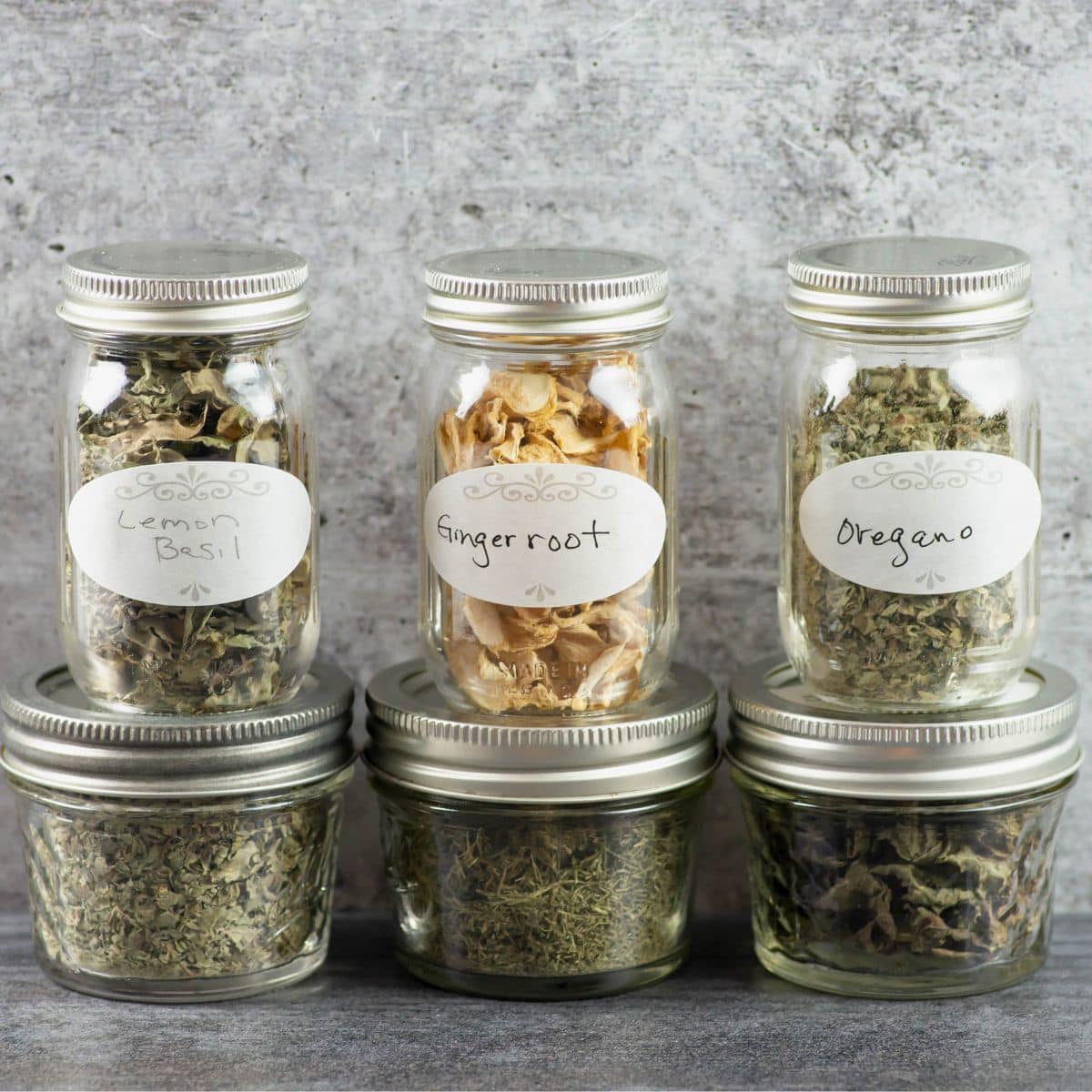
What can you do with dried lemon basil
- Make lemon Basil tea or mix your own herbal tea blends. Combine dried mint with dried Lemon Basil and brew a refreshing cup of herbal Mint tea.
- Make lemon Basil salt or sugar.
- Make Lemon Basil simple syrup to make Lemon Basil soda, add it to iced teas, lemonade or even this Blackberry Lemon Basil Gelato.
How to make herbal fire pit bundles:
Since you will already have the supplies to make these fragrant herbal fire bundles, why not turn trash into treasure?
Save the leftover lemon basil stems (this is why I dry most of my long stem herbs on the stem) and bundle them with cotton string to make an easy homemade aromatic fire pit or fireplace bundle that smells wonderful as it burns.
All you need are the dried herb stems, a bit of twine or kitchen string, a scissor and a few minutes to tie them into small bundles for your next backyard fire.
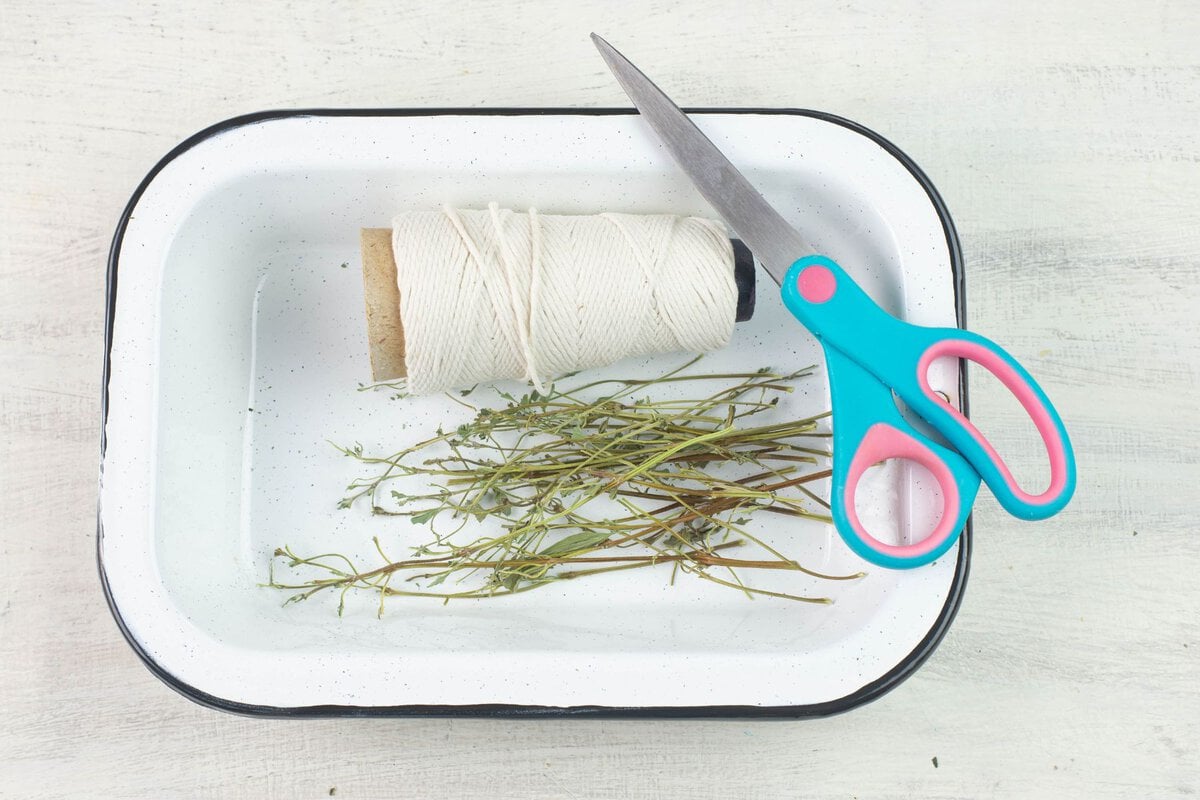
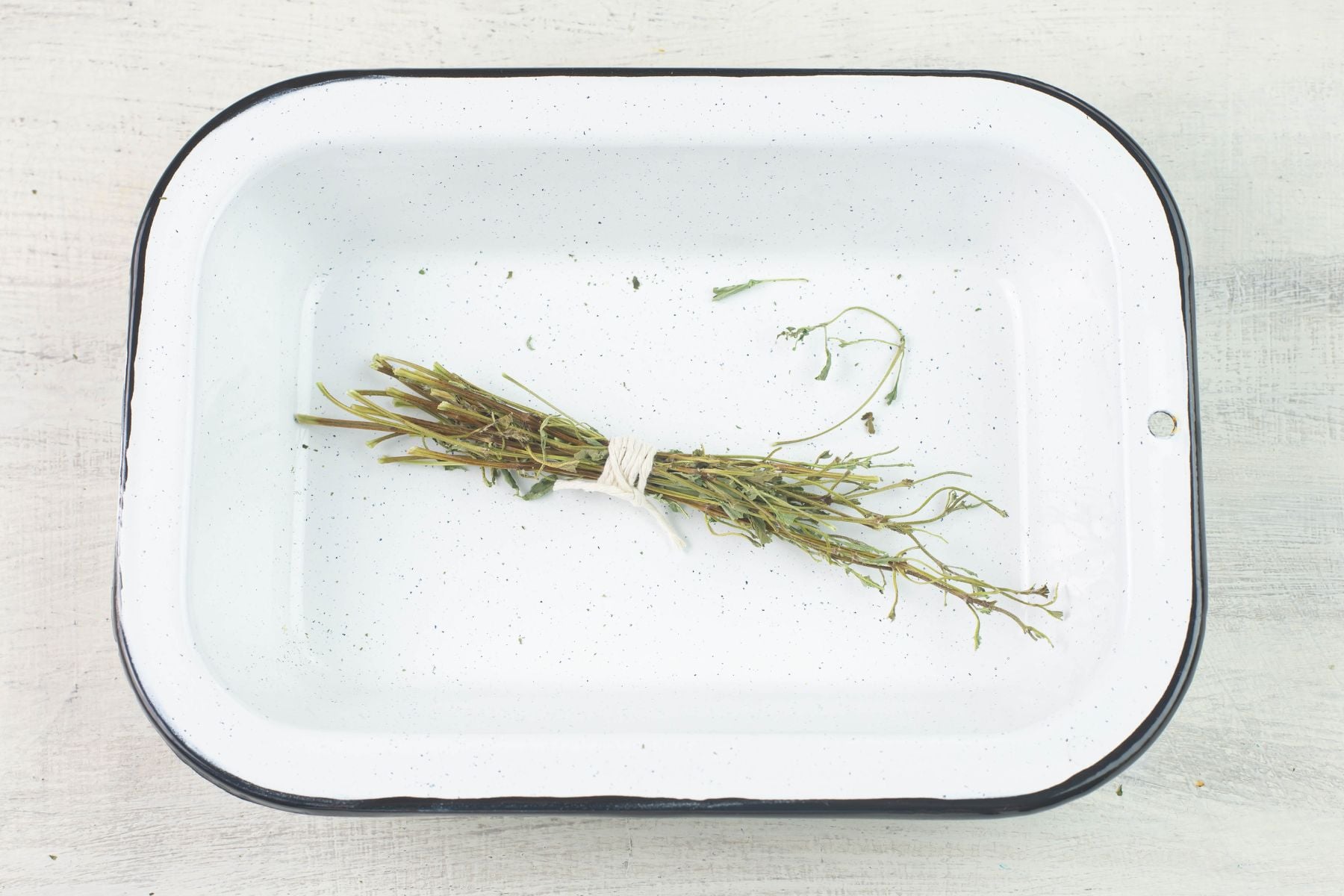
Once your lemon Basil stems are dry strip off the leaves, gather them into small bundles and tie them tightly with cotton string.
They don't have to look perfect. The goal is to make small, fragrant bundles that are easy to toss onto the fire once it is already burning.
Drying lemon basil is a simple way to save those fresh garden herbs and enjoy their bright, citrusy flavor long after the growing season ends while you sip on a refreshing cup of herbal tea.
Store your dried herbs properly, save those leftover stems for fragrant fire bundles, and you'll get every bit of use from your harvest.
⭐Leave a Star Rating
Have you tried the recipe? Leave a star rating in the recipe card below to let me know how the recipe turn out.
Email questions or recipe requests to flouronmyface@gmail.com. Follow me on Pinterest, YouTube, Instagram and Facebook.
How To Dehydrate Lemon Basil
Ingredients
- 3 bunches fresh lemon basil (or use as much as you want)
- 4 cups water (enough to cover and rinse repeatedly)
Instructions
- Harvest the lemon basil: Snip fresh lemon basil stems in the morning after the dew has dried. Choose healthy, unblemished leaves.
- Rinse and dry: Gently rinse the basil under cool water to remove dirt or insects. Shake off the excess water and pat dry with paper towels or use a salad spinner.
- Remove the leaves: Strip the lemon basil leaves from the stems. Discard any bruised, yellow, or damaged leaves.
- Arrange on trays: Place the leaves in a single layer on the dehydrator trays, leaving a little space between them for air flow.
- Dehydrate: Dry at 95°F to 105°F for 2 to 4 hours, or until the leaves are completely dry and crumble easily between your fingers.
- Cool completely: Let the dried basil cool on the trays before storing to prevent moisture from forming in the jar.
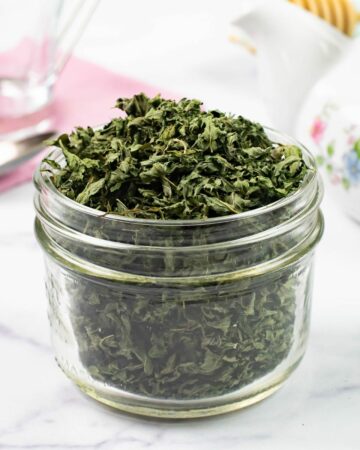
- Store: Place the dried lemon basil leaves in an airtight jar or container. Store in a cool, dark cabinet for the best flavor.
Miz Helen
What a great idea to dehydrate the Lemon Basil. We are featuring your post this week on Full Plate Thursday, 797. Thanks so much for sharing your talent with us and come back to see us soon!
Miz Helen
Arlene Mobley
Thank you Miz Helen!