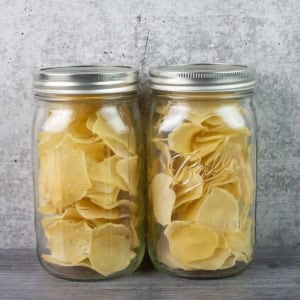
How To Dehydrate Scallop Potatoes
Learn how to make dehydrated scalloped potato slices at home for easy long-term storage and meal prep. The potatoes are thinly sliced, blanched, and slowly dried until crisp and brittle, making them perfect for storing in mason jars or Mylar bags and rehydrating later for homemade scalloped potatoes, casseroles, soups, and other easy meals.
Ingredients
- 5 lbs. Russet Potatoes (or as many as you have)
- 12 quarts water (approximate)
- 2 teaspoons salt
Instructions
- Prep the potatoes: Prepare, slice, blanch, and cool the potatoes following the prep instructions above.
- Arrange on dehydrator trays: Place the cooled potato slices in a single layer on the dehydrator trays. Do not overlap the slices, or they may stick together as they dry. Load the trays into the dehydrator and secure the lid.
- Dehydrate the potatoes: Set the dehydrator to 125°F and dehydrate for 8 to 12 hours, or until completely dry.
- Rotate the trays: Check the potatoes about every 4 hours and rotate the dehydrator trays for even drying.
- Check for dryness: Starting around the 6-hour mark, check the thickest potato slices. If the slices are uneven in thickness, flip them when rotating the trays to help them dry evenly.
- Test for doneness: Remove a few of the thicker slices and let them cool to room temperature. Fully dehydrated potato slices will look slightly translucent and feel very hard and brittle. They should snap instead of bend and have no soft spots, especially in the center.
- Cool completely: Turn off the dehydrator and allow the dried potato slices to cool completely on the trays. Transfer the cooled potatoes to a bowl for easy packing.
- Store: Pack the dehydrated potato slices into airtight mason jars or Mylar bags and store as directed.
Recipe Expert Tips
- Slice the potatoes evenly: Use a mandoline or vegetable slicer to cut the potatoes into uniform slices. Even slices will dehydrate at the same rate and help prevent some pieces from staying soft.
- Do not skip blanching: Blanching the potato slices before dehydrating helps preserve their color and texture and prepares them for more even drying.
- Keep slices in a single layer: Arrange the potatoes so they do not overlap on the dehydrator trays. Overlapping slices can stick together and may not dry completely.
- Check the thickest slices first: Thicker pieces take the longest to dry. Let a few cool to room temperature before testing—they should be hard, brittle, and snap instead of bend.
- Cool completely before storing: Never pack warm dehydrated potatoes into jars or Mylar bags. Trapped heat can create condensation, which may lead to moisture and spoilage.
Nutrition
Serving: 1ServingsCalories: 149kcalCarbohydrates: 34gProtein: 4gFat: 0.2gSaturated Fat: 0.05gPolyunsaturated Fat: 0.1gMonounsaturated Fat: 0.004gSodium: 444mgPotassium: 788mgFiber: 2gSugar: 1gVitamin A: 2IUVitamin C: 11mgCalcium: 53mgIron: 2mg
Tried this recipe?Share a picture on Instagram and tag @flouronmyface2
